From molecule to monitored container.
Extraction, synthesis, particle engineering and export packing run under one specification system. The point is not to own every machine — it is to own the standard the machines run to.
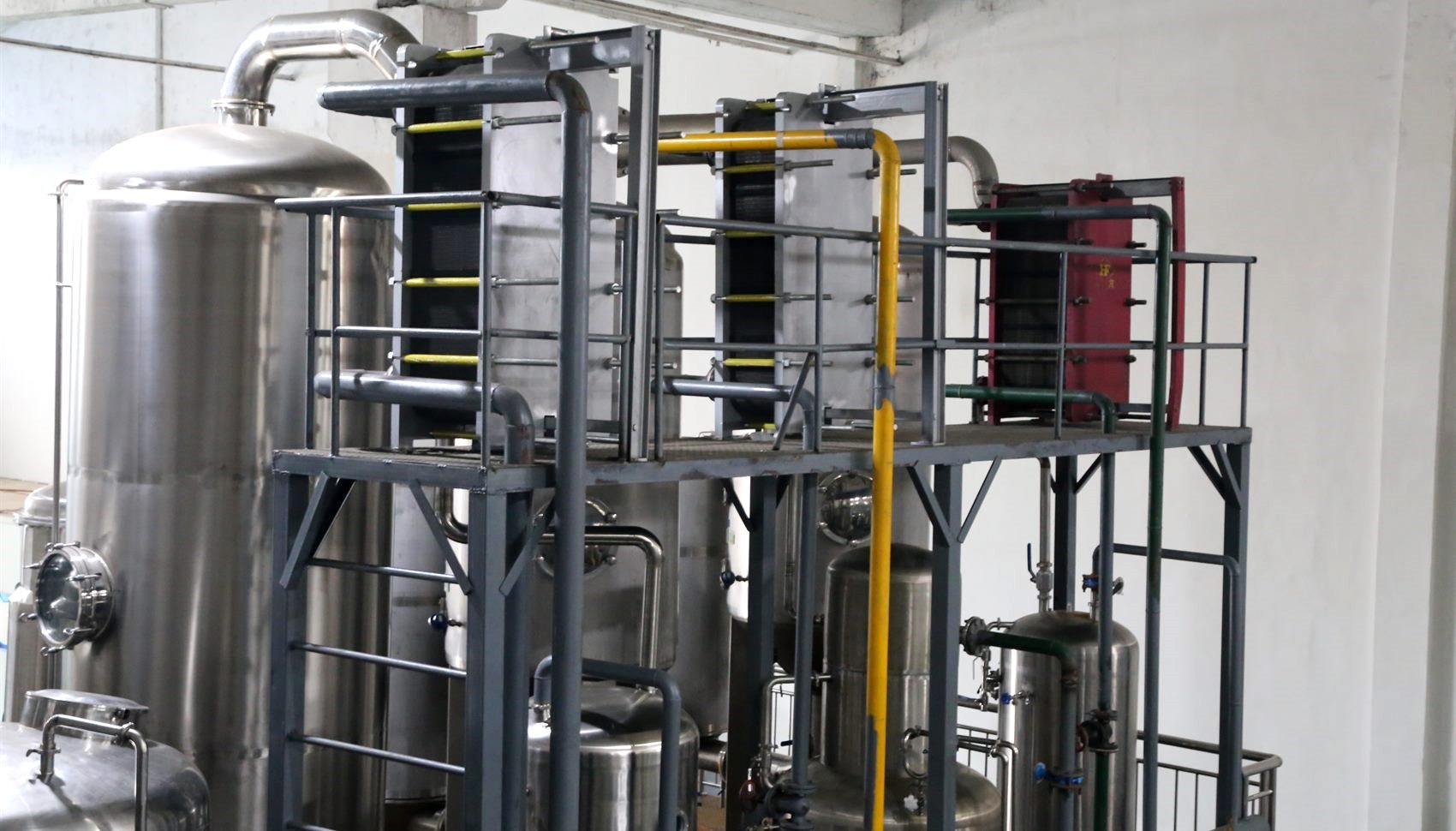
COMMERCIAL 3 T
Botany is variable. The specification is not.
Leaf, root, seed and flower arrive with different moisture, marker content and microbial load. We characterise the incoming biomass, adjust the extraction ratio against the marker assay, and only then release a lot that matches the agreed range.
Water, ethanol and supercritical CO₂ extraction are available, followed by column chromatography, crystallization, membrane filtration and spray drying. Crude 4:1 powders, ratio extracts and high-purity isolates can be produced from a single botanical lot, which keeps your supply chain traceable end to end.
- Pilot scale5 L – 50 L
- Commercial scale500 kg – 3 t per batch
- PurificationColumn · crystallization · membrane
- DryingSpray dry · vacuum · freeze dry
Ratio extracts through to high-purity isolates from the same botanical lot
Botanical species held in qualified, multi-year supplier programmes
Ginkgolic acid limit on ginkgo lines, verified per lot
A route, an impurity spec, then a batch record.
Custom work fails when the analytical definition is vague. We agree the impurity profile and the release method before the first gram is made, so scale-up does not reopen the specification.
Brief
Structure, target quantity, purity goal, destination market and required documentation.
Route & IP review
Literature route scan, freedom-to-operate check where relevant, and a costed proposal.
Lab batch
Gram-scale synthesis with in-process control and a first impurity map by HPLC-MS.
Scale-up
Kilogram campaign with batch records, deviation log and a validated release method.
Release
COA, TDS, SDS, stability starting data and a retained sample held for 24 months.
What we run
Multi-step organic synthesis, esterification, amidation, hydrogenation, protection and deprotection, salt formation and resolution. Reactions from −78 °C to 200 °C, pressures up to 10 bar where the route requires it.
How we prove it
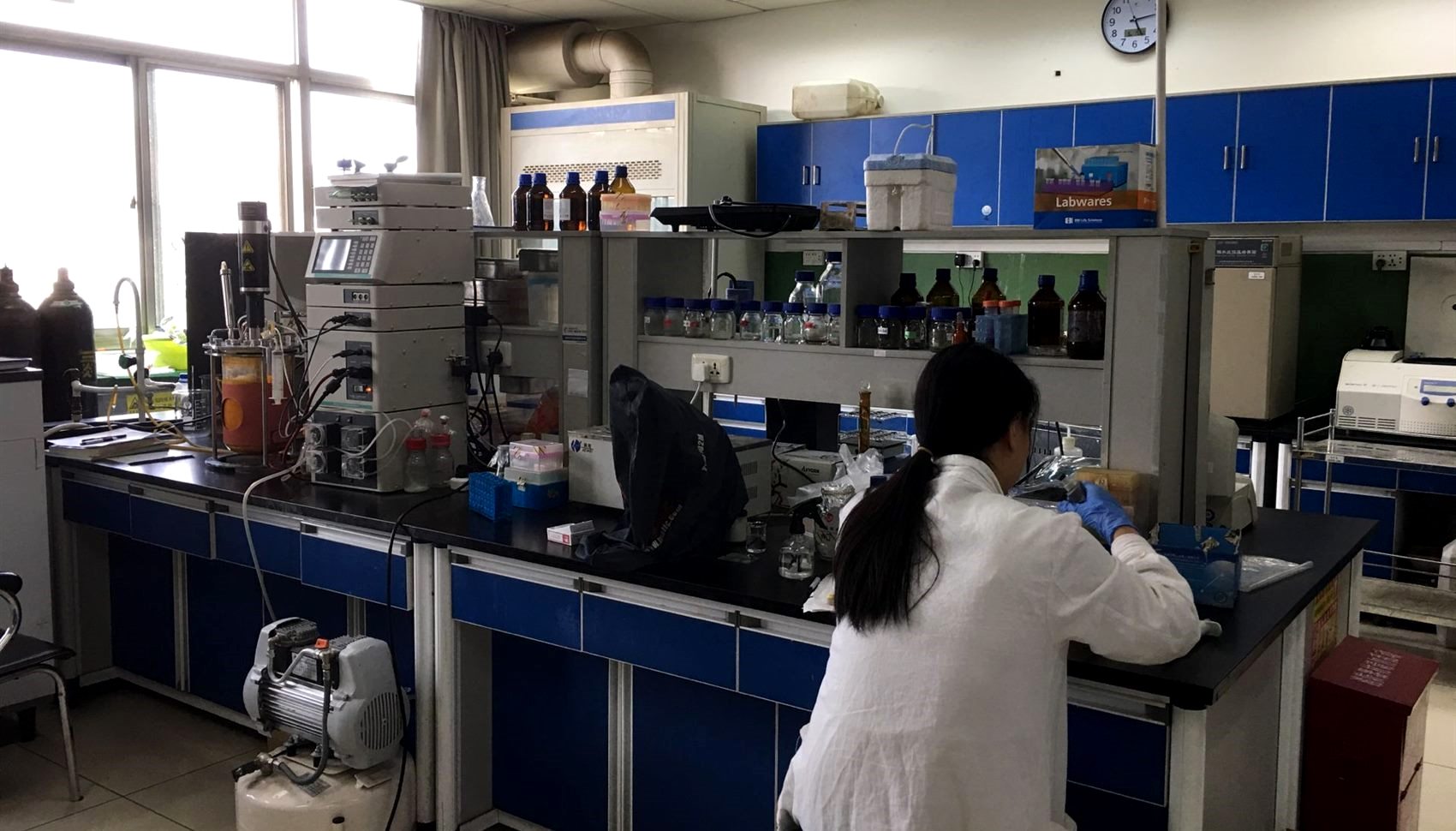
HPLC-UV and HPLC-MS for identity and purity, GC-MS for volatile impurities, ICP-MS for metals, Karl Fischer for water, and preparative HPLC for reference-standard isolation.
The same molecule can fail on particle size alone.
Most formulation complaints we receive are not about assay. They are about flow, dispersion, solubility or colour. Those are engineering parameters, and they belong in the specification.
| Operation | Range / option | Typical reason | Documented as |
|---|---|---|---|
| Jet / pin milling | D90 10–50 µm | Capsule fill uniformity, tablet flow | Particle size report, laser diffraction |
| Granulation | Wet, dry or roller-compacted | Dust control, densification, blend stability | Granule size and density specification |
| Water-soluble grade | Solubilised or dispersed | Beverage, shot and RTD formats | Solubility test at 25 °C, w/v |
| Premix blending | 2–12 components | One weighing step at your plant | Component assay and homogeneity report |
| Encapsulation | Cyclodextrin, lipid, spray-dried | Odour masking, oxidation, stability | Encapsulation rate and release data |
Any of these operations changes the release specification. We issue a revised controlled specification and a fresh COA — we do not ship a modified material against an old document.
Eighteen instruments and one signature.
A lot leaves only when an authorised QC reviewer signs the release sheet against the customer specification. The reviewer can hold a shipment; sales cannot overrule the hold.
HPLC, GC, GC-MS, ICP-MS, UV-Vis, KF
Sampling plan for packaged lots
Retained sample and batch record
Packed for your line, not for our warehouse.
Packaging is part of the specification: the liner, the net weight and the label content are agreed in writing before production, not chosen at the dispatch door.
| Format | Net weight | Use case |
|---|---|---|
| Foil bag, double PE liner | 100 g / 500 g / 1 kg | Samples, pilot runs, peptide work |
| Fibre drum | 10 kg / 25 kg | Standard production quantities |
| Palletized drums | 500–1,000 kg | Container loads, contract supply |
| Custom private label | Your pack, your artwork | OEM and distributor programmes |
Every lot label carries product name, CAS where applicable, batch number, net weight, storage condition and a QR link to the digital COA.
FOB · CIF · DDP
Air freight for samples and small lots, sea freight for production volumes, and DDP where your import entity needs a landed price. We quote the Incoterm you actually operate under and name the port.
Prepared before the vessel closes
Commercial invoice, packing list, certificate of origin, health certificate where required, COA and SDS attached to the shipping file, and a lot genealogy sheet on request.
Your brand on our batch record.
Private-label packing
Your artwork, your pack sizes, your lot-numbering convention — produced against the same release specification as our standard grade.
Blends & premixes
Multi-component blends with per-component assay and homogeneity verification, so one weighing step replaces five at your plant.
Label & claim review
Regulatory review of ingredient naming and permitted claims for your destination market. We flag what the documentation can support — and what it cannot.
Bring us the problem, not just the product name.
Tell us what the material has to do in your process — dissolve, disperse, fill, stabilise, pass an audit — and we will propose the grade and the documentation that supports it.